
Messali Hadj (Arabic: مصالي الحاج), whose real name was Ahmed Mesli, was born in Tlemcen, Algeria, on May 16, 1898, and died in Gouvieux, France, on June 3, 1974. He was an Algerian politician who played a pioneering role in the process leading to Algerian independence, which he began demanding in 1927.
Born into a modest family-his father was a shoemaker-he became aware at a young age of the inequalities imposed on Algerians under the colonial system. After primary school, he worked various jobs before being mobilized into the French army during the First World War, an experience that fueled his political awareness and his rejection of colonial domination. In the 1920s, he settled in Paris, where he frequented immigrant working-class circles and anti-colonial movements. He quickly became one of the leading figures of Algerian nationalism. In 1926, he participated in the creation of the North African Star, the first organization to openly demand Algerian independence. His discourse was based on national dignity, social justice, and the right of peoples to self-determination. Charismatic and an excellent orator, he mobilized thousands of Algerian workers in France and Algeria.
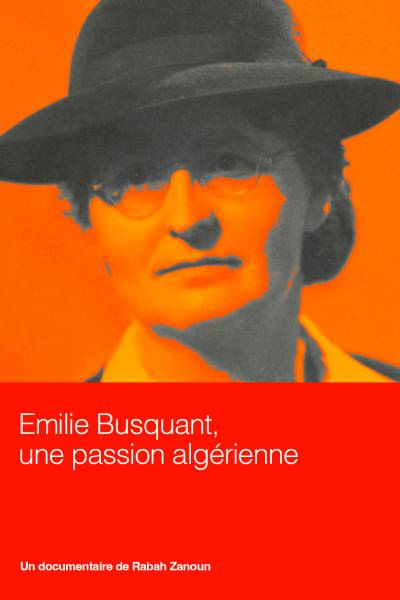
After the dissolution of the North African Star by the French authorities, he founded the Algerian People's Party (PPA) in 1937, and then the Movement for the Triumph of Democratic Liberties after the Second World War. Throughout his life, he endured arrests, surveillance, and exile. Despite the repression, he remained a symbol of the national struggle. His ideology championed an independent Algeria, committed to its Arab and Muslim identity, but also to popular sovereignty. He believed in mass political organization and the awakening of the people as the primary driving force of liberation. His wife, Émilie Busquant, played a significant role in his life. A committed French activist at his side, she actively supported the Algerian independence movement. She participated in spreading nationalist ideas and designed the first modern Algerian flag, conceived by Messali Hadj, which became a symbol of the nation. Their union also represented a shared political commitment against colonialism. The couple had children, notably Djanina Messali-Benkelfat, who remained closely connected to the family history and collective memory of the national movement.
When the war of independence began in 1954, tensions between Messali Hadj's supporters and the National Liberation Front (FLN) caused a deep division within the nationalist movement. The Algerian National Movement (MNA), which he led, entered into a bitter rivalry with the FLN. This opposition weakened his political influence during the war, even though his historical role in the awakening of Algerian nationalism remained fundamental. After Algeria's independence in 1962, Messali Hadj was gradually marginalized by the FLN-backed government. He spent the last years of his life in France and died on June 3, 1974, in Paris. His body was then repatriated to Algeria, where he was buried in Tlemcen.
In Algerian history, Messali Hadj remains considered the "father of modern Algerian nationalism." Even before the armed uprising, he gave a political structure to the independence movement and trained several generations of activists.



















Add your information (With the self-presentation files)
Convention with Wikiafrica / Wikipedia : Southplanet's contents are shared for free according to the licence Creative commons  .
.
© Some artistic content (photos, videos, sound recordings, written texts) is subject to copyright. Copyright is mentioned when and where it applies. Copyrighted material cannot be reproduced.