
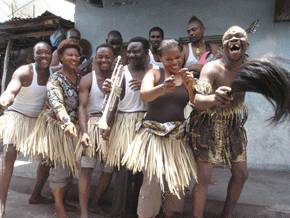
Dar es Salaam's Young Stars Modern Taarab almost single-handedly created a new style when they released their song "Segere" in 2001. Besides its uncommon mixture of lyrics in both Zaramo and Swahili language the song was especially noteworthy for its fast rhythm directly descending from Zaramo cultural traditions! Akin to a similar synthesis of the same in mchiriku--another modern-style take on Zaramo musical traditions from Dar es Salaam.
Both Segere and mchiriku extend the heritage of the coastal chakacha rhythm and dance which extends all along the coastal rim from the Lamu Archipelago in the north to the Dar es Salaam area in the south, mixing it with even faster Zaramo rhythms and songs. Where mchiriku uses a mix of actual Zaramo ngoma drums (like dumbaki and misondo)--with a small Casio keyboard amplified via megaphones as the sole lead instrument--the Segere style is more like modern taarab and dance band music in its instrumentation: Solo and bass guitar, keyboard; while modern taarab indulges in the ever same drum machine patterns, the main attraction of the Segere style is its live drum set, especially as played by Abdalla "Kimonda".
Together with bass player Tony Karama and solo guitarist Mjusi Shemboza Kimonda propels Segere's songs to ever new hights and speed records.The group's featured singer is Fatuma Rajab, inimitable incarnation of the Segere vocal style and also a fantastic dancer. Vocal chores are also handled by "Madobe", comparable to a rapper or toaster improvising ever new lines of commentary on the songs or persons in the audience. Segere's performance is more like a theatrical play, acting out the songs or other Zaramo oral stories. A good sense of this drama is provided by some of their locally produced video clips.
Description from Sauti za Busara: http://www.busaramusic.org















Add your information (With the self-presentation files)
Convention with Wikiafrica / Wikipedia : Southplanet's contents are shared for free according to the licence Creative commons  .
© Some artistic content (photos, videos, sound recordings, written texts) is subject to copyright. Copyright is mentioned when and where it applies. Copyrighted material cannot be reproduced.
